-
Email sales@cherryplastics.com
-
Call +92 334 3195599
Email sales@cherryplastics.com
Call +92 334 3195599
The fastest way to gain warehouse space without expanding your facility is to stack plastic crates vertically using the right combination of crate types, stacking patterns and floor layout. Most Pakistani warehouses use only 40 to 50 percent of their available vertical space because crates are placed randomly on the floor instead of being stacked in organized columns with clear aisle access.
This guide covers stacking methods, crate selection by use case, floor layout strategies and common mistakes that waste space in industrial storage environments.
Floor space is what most warehouse managers think about first. But the real capacity problem in Pakistani warehouses is overhead. Ceilings are typically 4 to 6 meters high while goods sit stacked only 1 to 2 meters off the ground. That gap between the top of the stack and the ceiling is unused capacity.
This happens for three reasons. Workers stack crates unevenly, so columns become unstable after 3 or 4 layers. The wrong crate type is used for the load, causing crushed or tilted stacks. And there is no planned layout, so crates end up scattered across the floor with no clear aisles or retrieval paths. Fixing these three problems is what turns a cluttered warehouse into an organized one.

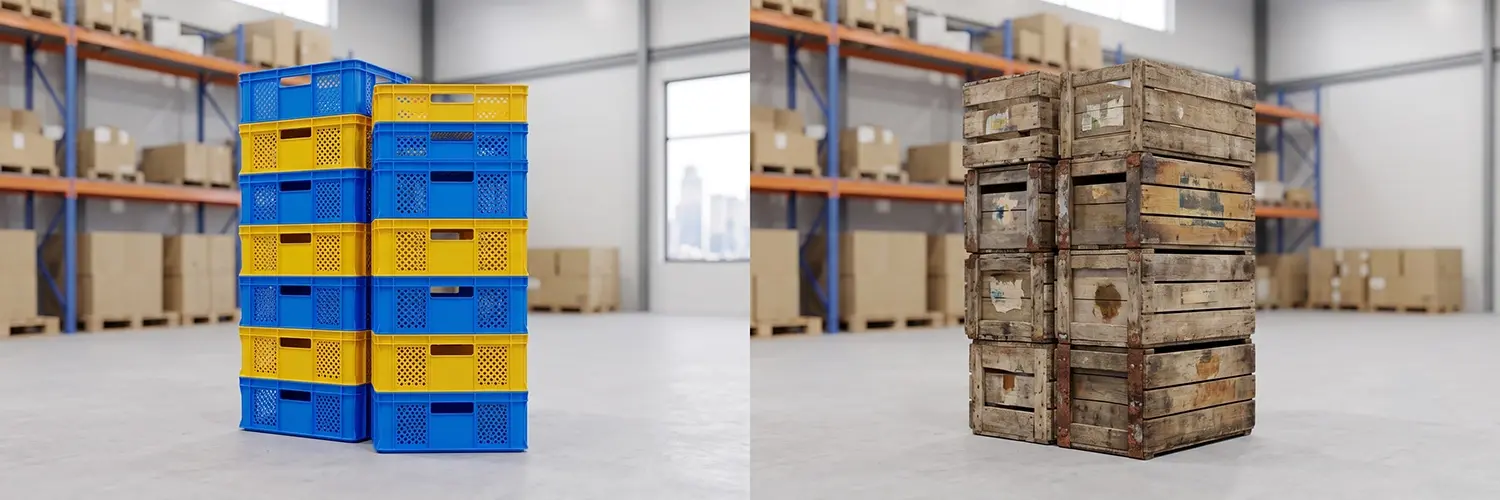
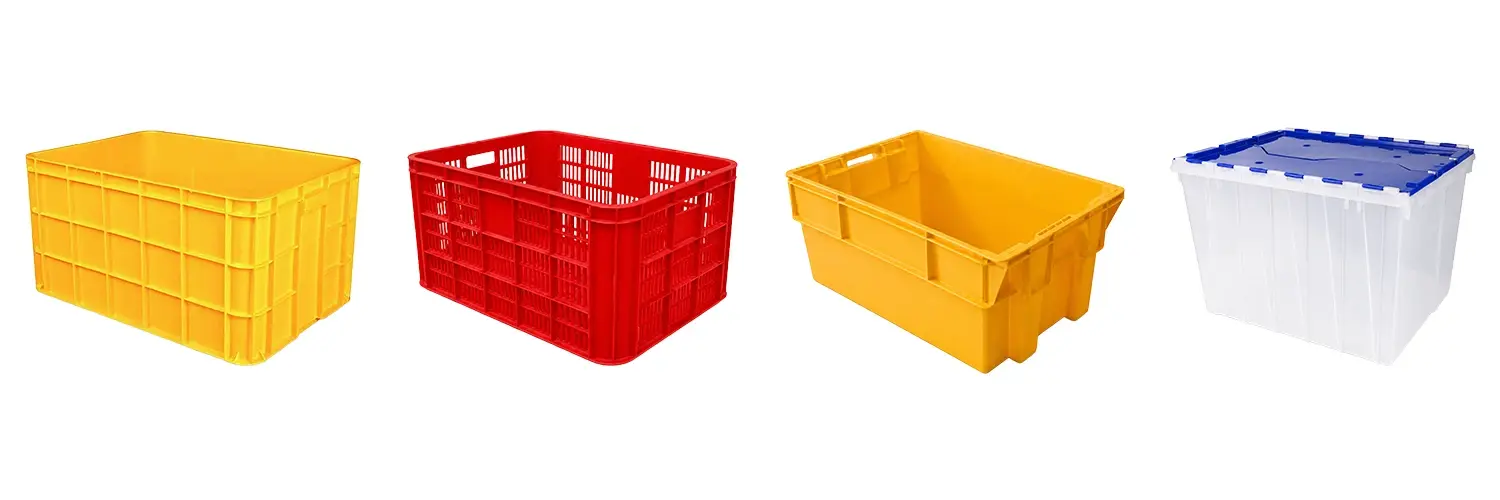
Not all plastic crates behave the same way when stacked. The two main categories are stackable crates and nestable crates and picking the wrong one for your operation creates problems.
These crates sit flat on top of each other. The rim of the lower crate supports the base of the crate above it, creating stable vertical columns. Stackable crates are built for loaded storage. When your crates are full of product and need to stay stacked for hours or days, this is the type you need.
Nestable crates taper inward so that empty crates slide inside each other, reducing the space they occupy during return transport or off-season storage. A stack of 10 empty nestable crates takes up roughly the same height as 3 or 4 stacked crates. This saves significant space on return logistics.
Some crates are designed to do both. When loaded they stack securely. When empty they rotate 180 degrees and nest inside each other. Models like the P-2 and J-2 in the stackable/nestable series are built for this dual function, making them useful for operations that need both loaded storage density and efficient empty returns.
The simplest and most stable method. Crates are placed directly on top of each other in a single vertical column with each crate aligned to the one below it. Column stacking works best when all crates in the stack are the same model and size. It offers the highest vertical density and easiest access to the top crate.
Multiple columns placed side by side in a grid pattern, creating a block of crates. This is the most common method in Pakistani warehouses for bulk storage. The tradeoff is that only the crates on the outer edges of the block are directly accessible. Products in the center of the block require moving outer columns first, so this method suits LIFO (last-in, first-out) inventory flows.
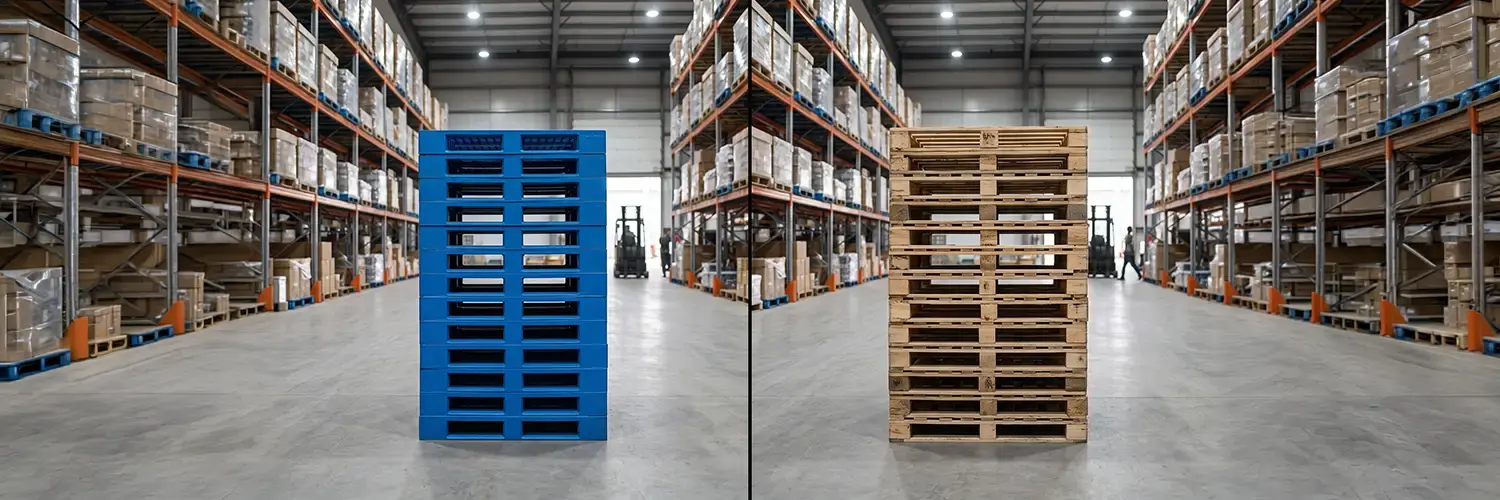
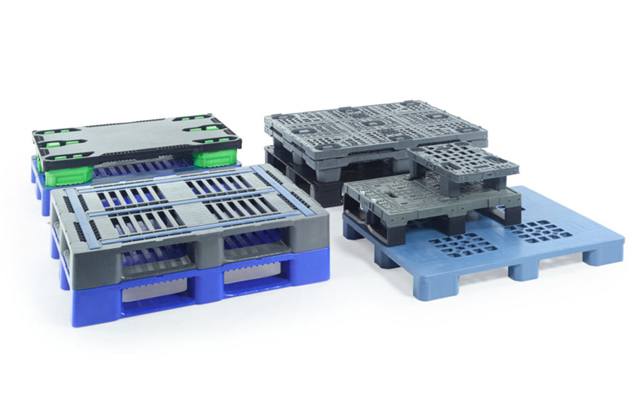
Crates are loaded onto pallets first, then the pallets are stacked or placed on pallet racking systems. This method keeps crates off the floor (important for food and pharma), allows forklift handling and works well with racking infrastructure. The crate-to-pallet size ratio matters here. Mismatched sizes leave gaps on the pallet surface that reduce density and create instability.
Floor-level stacking does not mean filling every open spot with crates. It means using each marked floor position more efficiently. Here is a simple way to think about it. If one crate occupies a floor position, stacking three compatible crates safely on that same spot triples your storage in that footprint.
The actual gain depends on crate dimensions, product weight, safe stack height, ceiling height and the space needed for handling equipment. Organized vertical stacking can improve storage density by 30 to 40 percent compared to random floor placement. But going higher without checking load limits creates safety problems fast, so every added layer needs to be within the crate's rated capacity.
Using a single crate size for everything is the most common space-wasting mistake. Different products need different crate volumes and dimensions. Forcing large items into small crates means wasted handling time. Putting small items in oversized crates means wasted vertical space per stack layer.
A practical approach is to standardize on 2 or 3 crate sizes that cover your product range:
The key is matching crate volume to product volume so every cubic centimeter inside the crate is used. Empty airspace inside crates is wasted warehouse height multiplied across every stack layer.
Stacking technique means nothing if the floor layout is chaotic. A structured layout turns random piles into a system that workers can navigate quickly and forklifts can operate safely. The basic rules:
For operations using plastic pallets with racking systems, aisle widths and stack heights are defined by the racking manufacturer's load specifications. Do not exceed the weight rating per shelf level.

These are the errors that waste the most space in warehouses across Pakistan:
Maximizing warehouse space starts with using the space you already have. Choosing the right stackable or nestable crates, keeping stacks stable and planning your floor layout can help you store more without expanding the facility.
The right industrial crates also make a difference. Crates should match your products, stacking method and handling requirements.
Cherry Plastics manufactures plastic crates, pallets and other material-handling products for warehouse and supply-chain applications across Pakistan. Explore Cherry Plastics' range of plastic crates to find options suited to your storage needs.
1. How many plastic crates can you stack on top of each other?
The safe stack height depends on the crate model, load, condition and manufacturer's stacking specification.
2. What is the difference between stackable and nestable crates?
Stackable crates sit on top of each other for loaded storage, while nestable crates fit inside one another when empty to save space.
3. Should I use plain or perforated crates for warehouse storage?
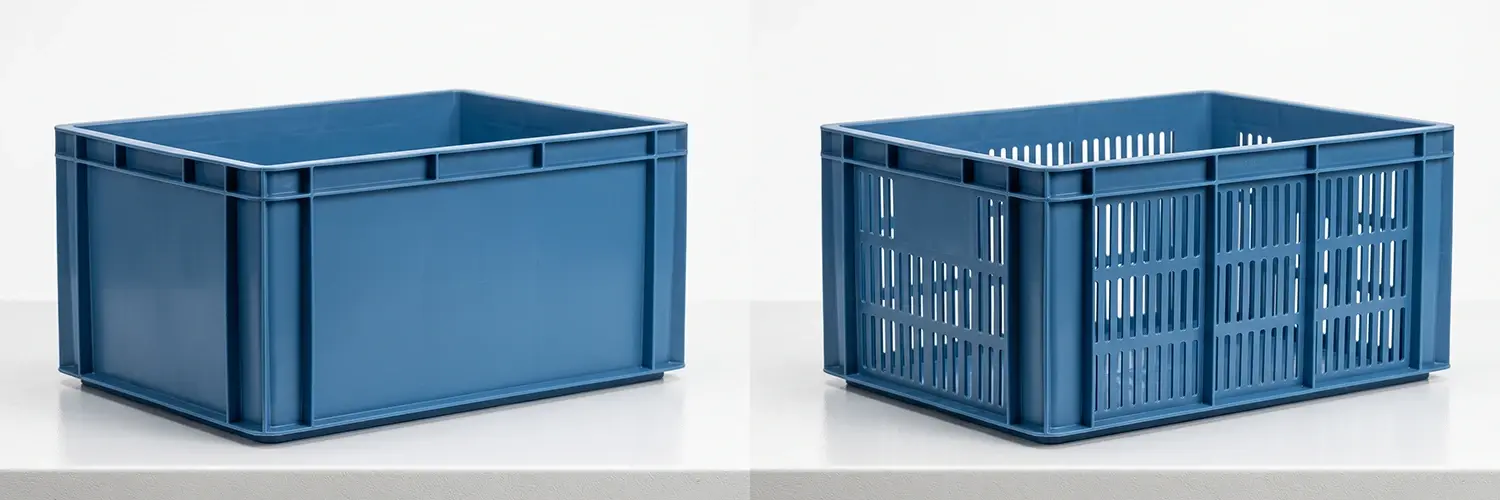
Plain crates offer more protection, while perforated crates allow airflow for products that need ventilation.
4. Can plastic crates be used with pallet racking systems?
Yes, provided the crate dimensions, pallet size and racking system are compatible with the required load ratings.
5. How much warehouse space can proper stacking save?
The amount depends on crate size, stack height, ceiling clearance, floor layout and handling requirements.
Copyright 2026 © All Rights Reserved
Designed & Developed by : Digital Hyperlinks (PVT) LTD.